Showing posts with label plastic embossed film. Show all posts

Friday, December 19, 2014

Best poly embossed films-Ld plain films-Stretch films-Ld semi embossed film Manufactures in India

Hitech packaging provide high quality,good strength and performance oriented packaging materials such as plastic films.It is a thin continuous polymeric material. Thicker plastic material is often called a “sheet”. These thin plastic membranes are used to separate areas or volumes, to hold items, to act as barriers, or as printable surfaces.Plastic films are used in a wide variety of applications. These include: packaging, plastic bags, labels, building construction, landscaping, electrical fabrication, photographic film, film stock for movies, video tape, etc.


Blister films


Hitech Packaging offers you the best blister film.Blister Films & Foils offer a high-quality package that ensures a long shelf-life while protecting its contents. This product help address the latest FDA regulations while providing the most advanced cost effective, secure form of pharmaceutical packaging available today.

Ld plain films


We have an experience of over 20 years.Our products are resistant to water, rain, dust, humidity etc and have a prolonged shelf-life. We manufacture films of any colour and specification as per the requirement of our customers. Standard colours are Milky White, French Blue, Red, Yellow and Natural.

To Get semi embossed films for more visits 
http://www.semiembossedfilm.com/

Monday, December 15, 2014

Super Plain films-Semi embossed & embossed films-LD semi embossed films-LDPE semiembossed film-blister films in India

Hitech provides you the best highly stretchable stretch wrap films. Stretch wrap films are the highly stretchable plastic film and the most common stretch film is LDPE (Low Density Poly Ethylene).

Many films have about 500% Stretch at break but are only stretched to about 100 to 300% in use. Once stretched the stretch wrap film elastic recovery is used to keep the load tightly.


Semi embossed film

Hitech packaging provide high quality,good strength and performance oriented packaging materials such as  semi embossed films .It is used as a liner to the calendared rubber to retain the properties of rubber and also to prevent dust and other foreign matters from sticking to the rubber while calendaring and during storage. It is manufactured with 100% virgin Low Density Polyethylene.


Blister film

Hitech Packaging offers you the best blister film.Blister Films & Foils offer a high-quality package that ensures a long shelf-life while protecting its contents. This product help address the latest FDA regulations while providing the most advanced cost effective, secure form of pharmaceutical packaging available today


Stretch film

stretch film is a highly stretchable plastic film that is wrapped around items. The elastic recovery keeps the items tightly bound. In contrast, shrink wrap is applied loosely around an item and shrinks tightly with heat.
It is frequently used to unitize pallet loads but also may be used for bundling smaller items.Types of stretch film include bundling stretch film, hand stretch film, extended core stretch film, machine stretch film and static dissipative film

for more get Quality  Ld semi embossed film-Ld plain films-poly embossed-Ldpe semi embossed films-Stretch films get Contact us on : 9846337143 or email : semiembossed@gmail.com
visit http://www.semiembossedfilm.com/


Friday, November 7, 2014

Best Quality Shrink Film

A shrink film can be made to shrink in one direction (unidirectional or mono-directional) or in both directions (bidirectional).Shrink film designs will become half their size and strong plastic pieces great for adding dimension to scrapbook pages and handmade cards. Easy to cut with decorative scissors, die cut machines and punches.Films are stretched when they are warm to orient the molecules from their initial random pattern. Cooling the film sets the film's characteristics until it is reheated.this causes it to shrink back toward its initial dimensions.


Types Of  Shrink Film 
  • LDPE shrink film
LDPE or Low-Density PolyEthylene shrink film is among the strongest shrink film in today’s world. Owing to its high-strength and tear-resistance, it is being widely used in a number of industries across the world. Though the film is a little hazy as compared to PVC shrink film, and it also shrinks at a little higher temperature as compared to PVC, but being environment-friendly and easily available, it is the first choice of packers.
                                        
  • PVC shrink film
PVC or Poly Vinyl Chloride shrink films is one of the most popular variety of shrink film discovered in recent times. This type of shrink film is very high on clarity and gloss and has a very good shrinkability. The inherent characterstic of being printable adds to its acceptability. The film shrinks at a low temperature as compared to other shrink films.
                                                                                                 
  • Polyolefin Shrink Film 
Polyolefin (POF) shrink film is a combination of PVC and LDPE shrink film as far as the characteristics go. It possesses the clarity and gloss of PVC and strength and tear-resistance of LDPE shrink film. It is food grade and can be safely applied for packing of food items.Another property of POF shrink film is that it shrinks at very low temperatures and has excellent shrinkage percentage in both the directions.                     
                                                                       

Advantages Of Shrink Bags 
  • Polyolefin Shrink Bags production saves cost of 4 L sealer and hot tunnel.
  • The production method is 4 times faster than manual method even faster than automatic machine. 
  • The production method for Polyolefin Shrink Bags saves wastage.  
  • Labour cost is saved.
  • Cost of floor space is saved.
  • Electricity cost is saved in the process of production of shrink bags.                                      
Shrink Films For A Variety Of Applications
  • Tamper-evident bands
  • Full- or partial-body roll sleeves
  • Wine capsules and disk plates
  • Full- or partial-body shrink sleeves
  • Pressure-sensitive shrink labels
  • Multi-packs                            

Monday, June 30, 2014

Best Cast Polypropylene Films (CPP)

CPP has been steadily gaining favour as the material of choice in both traditional flexible packaging applications as well as non packaging applications. The versatility and properties of CPP are combining to set it apart from other materials and establish itself as a true performance film.
High gloss, exceptional optics, excellent heat sealing performance, high heat resistance, good dimensional stability and barrier properties, pliability, excellent printability are performance factors that when combined with outstanding yield and economics, set CPP apart from all other film materials.


CPP is rapidly gaining broad based acceptance in an array of traditional and non-traditional packaging applications ranging from side-weld seal bags to stand-up reclosable pouches for textile and food packaging, candy twist wrap, document protection and sophisticated multi layer laminations designed to meet demanding packaging needs. CPP film structures can be specifically designed to run efficiently on modern high speed packaging machines. CPP can be metallized significantly increasing the barrier properties for demanding applications where product shelf life is a major factor.
As a packaging material, CPP can give your product the shelf presence it needs to capture consumer interest and generate outstanding sales. In non-packaging applications, the use of CPP is also growing. Its high heat resistance, dimensional stability and sealing performance make it ideally suited for a broad range of industrial and automotive applications.
CPP can be produced in both monolayer and multi-layer coextrusions structures. Through the selection of a broad range of available resins and specialized additives, film structures can be customized to meet very specific packaging performance and product marketing requirements.


Monday, March 31, 2014

Stretch Wrap Film

A highly stretchable plastic film commonly made from Linear low-density polyethylene (LLDPE) that is wrapped around items. The elastic recovery keeps the items tightly bound.Stretch film is commonly used to wrap products on pallets and secure them to each other and the pallet. This often helps to reduce products loss, discourage load tampering, and reduce worker injury. There are a variety of widths, thicknesses, and types of stretch film.


Friday, February 28, 2014

Semi embossed films in india

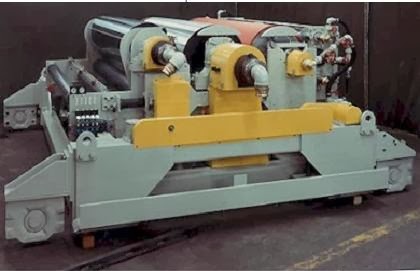
The fundamental mechanism in rotary embossing is the embossing nip, which is the area where two embossing rollers come into contact.  The simplest embossing applications use only a single nip.  Others may involve several embossing nips, either in series or in parallel.  Sometimes embossing is directly combined with other finishing processes, such as printing or laminating (which involves other nips).The types of embossing nips are named after the materials that have traditionally been used for the surfaces of the embossing rollers.  These materials are still the most common, but newer materials are being developed.
  • S/S (steel-to-steel):   Both rollers are engraved with patterns that are designed to engage each other in some way.  The surfaces of these rollers must be hard enough and durable enough so that the raised protuberances on each are able to deform the paper.  Traditionally, both surfaces have been steel, and therefore this type of embossing nip is called a "Steel-to-Steel" or S/S embossing nip.
  • R/S (rubber-to-steel):   Only one of the rollers is engraved, while the other roller is covered with a elastic material like rubber.  The surface of the elastic material is smooth, except while it is being pressed against the engraved roller in the embossing nip.  Elastic recovery to its original smooth shape is extremely rapid.  The surface of the engraved roller must be hard enough and durable enough to deform not only the paper that is being embossed, but also must deform the elastic material of the opposing roller (which requires much more force and energy than the paper does).  Traditionally, the engraved surface has been steel and the deformable surface has been rubber.  However, the engraved roller could have a laser engraved surface made of very hard rubber, while the smooth roller could have a surface made of an elastomeric plastic.
  • P/S (paper-to-steel):   There is another type of embossing nip which is really a hybrid between the two described above.  It is mostly used only for paper napkins where the embossing must produce bonding of multiple plies and/or high visual definition in the pattern.  In this case, the steel roller is engraved with the embossing pattern, while the opposing roller is a paper-filled roll that is initially smooth.  A "run-in" period is required to transfer the pattern from the engraved steel surface into the paper surface initially, and also to repair any damage that may later occur to the paper surface.
Embossing nips may be combined in parallel or in series.

  • Serial nips:   This is sometimes used to superimpose one embossing pattern over another, by passing the paper first through one embossing nip, and then through another.  It works best when the first pattern is a very fine-scale pattern that has complete coverage over the paper (like a micro embossing pattern), and the second pattern is composed of larger figures with large open areas between them (like a spot embossing pattern).  However, a very similar effect can often be achieved in a single nip less expensively.
  • Parallel nips:   This is only used for products that have two or more plies.  In a two-ply product, one ply is passed through one nip while the other ply is passed through the other nip, and then the two plies are brought back together again, usually with some method of bonding the plies together.  This is most often employed in two-ply laminated towel products, which use very carefully placed dots of glue to bond the plies together.  The choice of embossing patterns, how the pattern on each ply aligns with the pattern on the other ply, and the placement of the glue are all critical elements in the design of an embossed/laminated paper towel product.

Sunday, February 9, 2014

Embossed Film

Embossing Basics

Definition of embossing:  In the broadest sense, it means to change a surface from flat to shaped, so that there are regions that are raised up from a background.  This meaning would seem to encompass areas that are normally not called embossing:  carving figures into the face of a mountain (like Mt Rushmore), or engraving a steel block.  On this website, I use the word "embossing" only as it applies to thin and malleable materials.  Since the opposing surfaces of a thin material are very close to each other, each raised area on one surface is matched by a recessed area on the the opposite side, and vice versa.  One exception to this is sometimes called "pattern pressing" or "blind embossing".  This occurs when areas of one surface are recessed while the opposite side remains flat, causing the material to become thinner in those areas.  This is typical when embossing leather, for example.
Materials that are embossed:  Just about anything that is thin, flat, and malleable can be embossed.  This includes paper, plastic film, metal foil, nonwovens, textile fabric, leather, and even glass.  These materials may be provided in continuous form (like paper unwinding from a roll), or in discrete form (cut into individual sheets before embossing).
Purpose of embossing:  Sometimes embossing is done for purely decorative reasons.  However, in most cases, the purpose of embossing is to change the physical characteristics of the material.  Embossing a metal foil with a fine texture pattern makes it much easier to handle the foil within the machine that wraps it around a piece of chewing gum.  Embossing a plastic film changes its elastic properties dramatically.  Embossing tissue paper improves absorbency and flexibility, but almost always at the expense of strength.  Embossing increases the overall thickness of the material.
Methods of embossing are often determined by the properties of the material, and how it is provided.  The material may be malleable or fluid, or somewhere between.  It may be provided in continuous form (without breaks), or in discrete lengths or pieces.

  • For malleable materials, a permanent shape change is imposed simply by the application of force.  This usually has a very significant effect upon the mechanical properties of the material.  Most tissue paper is embossed this way, while the paper is completely dry.
  • For fluid materials, the embossing step starts out more like casting onto a mold while the material is still fluid, and then the material is changed from fluid to solid.  This reduces the effect of the embossing upon the strength and elasticity of the material.  In the case of tissue paper, the fluid state is the suspension of paper fibers in water, the mold is the forming wire, and the material becomes more solid as the water is removed.
  • Some embossed materials are somewhere between malleable and fluid.  For instance, tissue paper can be shaped after it is formed, but still very wet.  The results are much different from traditional "dry embossing".
  • When the material to be embossed has been cut into discrete lengths, it is usually necessary to employ an intermittent method like stamp embossing, where the sheet is pressed between two plates.
  • When the material to be embossed is provided in continuous form, without breaks, then the preferred method is rotary embossing, where the material is passed between embossing rollers.  Rotary embossing is much, much faster than any of the intermittent embossing methods.

Thursday, February 6, 2014

Embossed Polyethylene Film

Polyethylene film is a resinous material with thermoplastic properties that is synthesized by inducing oxidation polymerization of ethylene gas. The degree of pressure used in its manufacturing varies according to the density and melting point of the virgin polymer resin being used. Most commonly, sheets of polyethylene film are produced using a process known as blown film extrusion, in which the polymer resin is melted to its flow point and then extruded through a die to produce a tube of plastic. While the polyethylene is still supple, the tube is closed off at one end and then blown to inflate and stretch the film into the desired length and thickness. The thickness of polyethylene film can be as thin as .0004 inch (10.16 microns).
The introduction of this film was considered groundbreaking in terms of its application in the packaging industry. Specifically, it has proven to be highly valuable in the flexible packaging market. In fact, it has captured the majority of the plastic packaging segment, which primarily consists of bags and wrapping material used for storage or to provide protection from the environment. This includes plastic wrap to protect agricultural crops, as well as ordinary kitchen wrap used to preserve food. Of course, polyethylene film is also essential in the manufacturing of bags, from dry cleaning protective covers to garbage and grocery bags.


Sunday, February 2, 2014

Poly shrink film manufacturers

Shrink wrap is applied over or around the intended item, often by automated equipment. It is then heated by a heat gun or sent through a shrink tunnel or oven for shrinking.
Shrink wrap can be supplied in several forms. Flat rollstock can be wrapped around a product, often with heat sealing to tack the film together. Centerfolded film is supplied on a roll with the plastic is folded in half: product is placed in the center portion, the remaining three edges are sealed to form a bag, and the package then heated which causes the bag to shrink and conform to the product placed in the bag. Pre-formed shrink bags plastic bags are used with one end open: the product is placed in the bag, sealed, and sent for heat shrinking.
Shrink wrap can be used to wrap buildings. It can wrap roofs after hurricanes, earthquakes, tornadoes and other disasters. Shrink wrap can be used for environmental containments to facilitate safe removal of asbestos, lead and other hazards.
Shrink wrap is sometimes used to wrap up books, especially adult-oriented ones and certain comics and manga, mainly to prevent them from being read by minors.Software on carriers such as CDs or DVDs are often sold in boxes that are packaged in shrink wrap. The licenses of such software are typically put inside the boxes, making it impossible to read them before purchasing. This has raised questions about the validity of such shrink wrap licenses.
Shrink wrap is commonly used as an overwrap on many types of packaging, including cartons, boxes, beverage cans and pallet loads. A variety of products may be enclosed in shrink wrap to stabilize the products, unitize them, keep them clean or add tamper resistance. It can be the primary covering for some foods such as cheese, meats,vegetables and plants. Heat-shrink tubing is used to seal electric wiring.
Shrink bands are applied over parts of packages for tamper resistance or labels. It can also combine two packages or parts.Shrink wrap is also commonly used within more industrial applications using a heavier weight shrink film. The principles remain the same with a heat shrinking process using a hand held heat gun. The following shrink wrap applications are becoming more widely used and accepted:
  • Industrial shrink wrap containment of large plant equipment/components,
  • Scaffold wrap containment of buildings/bridges,
  • Building temporary shrink wrap structures for storage or other business operational uses,
  • Marine shrink wrapping of boats and other vehicles,
  • Shrink wrapping of palletized freight
  • Disaster contingency and relief projects such as damaged buildings/roofs.


Monday, January 27, 2014

Active packaging

The terms active packaging, intelligent packaging, and smart packaging refer to packaging systems used with foods, pharmaceuticals, and several other types of products. They help extend shelf life, monitor freshness, display information on quality, improve safety, and improve convenience.
The terms are closely related. Active packaging usually means having active functions beyond the inert passive containment and protection of the product. Intelligent and smart packaging usually involve the ability to sense or measure an attribute of the product, the inner atmosphere of the package, or the shipping environment. This information can be communicated to users or can trigger active packaging functions.
Depending on the working definitions, some traditional types of packaging might be considered as "active" or "intelligent". More often, the terms are used with new technologically advanced systems.
For many years, desiccants have been used to actively control the water vapor in a closed package. A desiccant is a hygroscopic substance usually in a porous pouch or sachet which is placed inside a sealed package. They have been used to reduce corrosion of machinery and electronics and to extend the shelf life of moisture sensitive foods and drugs.
Corrosion inhibitors can be applied to items to help prevent rust and corrosion. Volatile corrosion inhibitors (VCI) or vapor phase corrosion inhibitors can be provided inside a package in a pouch or can be incorporated in a saturated over wrap of special paper. Many of these are organic salts that condense on the metal to resist corrosion. Some films also have VCI emitting capability.
Films are available with copper ions in the polymer structure; these neutralize the corrosive gas in a package and deter rust.
VCI create a neutral environment in the packaging. It works on the principle of difference in vapour pressure and causes reaction with Metals and Non metals and also with Moisture to render it active to corrosion. There are different forms of VCI's available like Papers, Plastics, HDPE Papers, Oils, Foams, Bubble, and Emitters etc. that can prevent corrosion at many stages.

Monday, January 13, 2014

Film Embossing Process

Film embossing is a mechanical process in which a flat film is transformed into an embossed product. During the process, thermal and stress fields are applied to the polymer, causing changes in the microstructure and physical dimensions of the material. The engineering analysis of the process requires the study of various aspects relating to the characterization of the microstructure before and after embossing, A variety of techniques were employed to characterize the properties and microstructure of the embossed film in relation to crystallinity, orientation, mechanical properties, and dimensions of the embossed films. The thermal treatment of the polymer film was shown to be the most significant factor in the process. By controlling the thermal treatment of the film, it is possible to manipulate the properties and dimensions of the embossed film. The important aspects: influencing thermal treatment include the radiation heater temperature, preheat roll temperature, line velocity, and film thickness. The initial film orientation and embossing pressure have a minor effect on the final properties of the embossed film. The main effect of the embossing pressure is on the bulk thickness of the embossed film.

Monday, December 30, 2013

Stretch wrap film

Stretch wrap or stretch film is a highly stretchable plastic film that is wrapped around items. The elastic recovery keeps the items tightly bound. In contrast, shrink wrap is applied loosely around an item and shrinks tightly with heat.It is frequently used to unitize pallet loads but also may be used for bundling smaller items.Types of stretch film include bundling stretch film, hand stretch film, extended core stretch film, machine stretch film and static dissipative film.The most common stretch wrap material is linear low-density polyethylene or LLDPE, which is produced by copolymerization of ethylene with alpha-olefins, the most common of which are butene, hexene and octene. The use of higher alpha-olefins (hexene or octene) gives rise to enhanced stretch film characteristics, particularly in respect of elongation at break and puncture resistance.
       Other types of polyethylene and PVC can also be used. Many films have about 500% stretch at break but are only stretched to about 100 – 300% in use. Once stretched, the elastic recovery is used to keep the load tight.There are two methods of producing stretch wrap. 1) Blown: the resin is melted and blown out, it is air-cooled. This is a slower process but provides for higher quality in all the areas listed below. The cost of production is also higher due to the quantity that can be produced per hour. 2) Cast: the film is passed over cooling rollers. This makes the cooling process quick. The quality is not as good as blown but more can be produced in an hour with lower costs.Other properties such as break strength, cling, clarity, tear resistance, static discharge, etc. are also important.